Thesis Sectors Portfolio Strategy Team Contact About

Early-Stage
Australian
Hard-Tech

Early-stage investment in sectors of the real economy — Energy, Industrials, and Agriculture — where Australia's competitive advantages are greatest and capital is most scarce.

17
Portfolio
Companies
5yr
Track
Record
A$20M
Fund I
Target
25%
Target Net
IRR

Three Forces.
One Opportunity.

Three converging megatrends will reshape the global economy over the next two decades. Australia — with its singular endowment of resources, geographic position, and research capability — is uniquely placed to thrive. Yet Australian hard-tech remains chronically under-funded at the earliest stages, creating a structural pricing arbitrage that Kapunda is built to exploit.

Electrification of Everything

For the first time in human history, the cheapest way to create energy is not starting a fire. Solar and wind have made electrons the dominant energy paradigm — driving the electrification of transport, heavy industry, and HVAC as both economics and national security concerns accelerate the shift from fossil fuels.

AI Applied to the Physical World

Low-cost intelligence will increasingly be applied to physical industries — triggering a boom in robotics and autonomy that will transform energy, heavy industry, and agriculture. AI-native competitors will emerge with fundamentally different cost structures, eroding the incumbency advantages of legacy providers.

Increasing Geopolitical Complexity

The end of Pax Americana, the rise of China as a peer competitor, and a breakdown of the rules-based order are driving a collapse in confidence in globalised supply chains. Nations are rapidly re-investing in sovereign supply chain security — with critical minerals, energy, and food security at the centre.

Where the Trends Meet

Click any label to explore

AI ARMS RACE INDUSTRIAL SOVEREIGNTY ELECTROMATION GEOPOLITICS PHYSICAL AI ELECTRIFICATION

What We Look For

Hard Problems

Critical Challenges Facing Essential Industries

We invest in companies tackling the most pressing unsolved problems in energy, industrials and agriculture — where the market need is acute, the incumbents are slow, and the right technology can reshape an entire sector.

Exceptional Founders

Operators Who Break the Mould and Defy the Odds

We back jockeys, not just horses. At the earliest stage, founder quality is the single most important variable. We look for technical excellence, commercial instinct and coachability.

Real Technology

Innovation With a Physical Footprint

We invest in companies that marry hardware and software to create truly defensible moats. The largest and most durable technology companies — from Apple to Amazon to SpaceX — have always understood that hard-to-do is hard-to-copy.

Impact is a byproduct of scale, not a substitute for returns.
Only profitable companies can change the world.

How We Operate

Fund Size
A$20M
A$30M hard cap
Portfolio Size
20–25
Companies
Cheque Size
A$1M
Uniform, standardised
Fund Life
10 yrs
ESVCLP structure
Target Stage
Pre-Seed
/ Seed
Minimal competition
Target IRR
25%+
Net to LPs
Target MOIC
4.5×
Net to LPs
Mgmt Fee
2%
p.a. on committed capital
Early-Stage Focus

Pre-seed and seed is where most venture capital value is created. It’s also where competition for the best Australian hard-tech deals is the weakest. Entering early maximises ownership, provides the greatest influence over company direction, and builds the relationships that generate the best deal flow. It is also where our networks and sector expertise are strongest.

Solo GP Model

Solo GP structure enables speed, conviction and accountability in an asset class that rewards contrarian decision-making. It provides a mandate to back the “weird” and “difficult” hard-tech that institutional funds with consensus-based decision-making processes cannot. Supported by high-calibre Investment Committee, Advisory Board and founder network.

Nil Reserve Policy

All capital deployed upfront. No reserves held for follow-on. This maximises initial ownership (targeting 10%), eliminates signalling risk at later rounds, and creates a large pool of pro-rata allocations that LPs can access for direct follow-on investment.

LP Incentive Alignment

Fund designed to align GP and LP incentives and to enable LPs to compound exposure to the best companies in multiple ways:

  • Tiered carry structure
  • Co-investment and pro-rata rights
  • Right of first refusal on secondary share sales
Full details →
Streamlined Execution

Uniform investment sizing and standard deal terms for every portfolio company reduces legal cost and closing time for both parties. This both enhances Kapunda’s reputation and enables greater time allocation to activities which actually drive returns — sourcing deals, doing diligence and supporting portfolio companies.

High-Touch / Low Bureaucracy

No board seats taken. Advisory support focused on high-leverage network introductions and commercial discipline — not administrative burden. Enables prioritisation of companies that are succeeding and maximises time spent on activities that drive returns.

Early-stage venture capital is a high-risk, high-return asset class. A significant proportion of portfolio companies will not return capital and investments may take many years to generate returns. For further detail on Kapunda’s approach to risk management →

What We Offer

Alpha

Strong Uncorrelated Returns

By capitalising on structural pricing arbitrage at the pre-seed and seed stage of Australian hard-tech, Kapunda targets returns that are uncorrelated to public market cycles and superior to comparable asset classes.

Insight

Insider's View of Cutting-Edge Innovation

LPs gain privileged access to the technologies reshaping the global economy before they reach mainstream consciousness or public markets.

Substance

Innovation That Has an Impact

A portfolio that matters to Australia's future prosperity. Driving productivity and prosperity, and strengthening sovereign capability in industries that underpin Australia's long-term prosperity.

The Right Country
at the Right Time

Australia possesses world-leading solar and wind resources, abundant critical mineral deposits — lithium, copper, nickel, rare earths — and vast arable land with the potential to serve as the Indo-Pacific's food bowl.

Combined with world-class universities, a stable legal system, and strategic relationships spanning the US, China, India and South-East Asia, Australia is ideally positioned to be a global leader in the real economy sectors that will define the next century.

Yet Australia systematically under-invests in hard-tech innovation — investing 3x more than the US in residential housing and only one-third as much in venture capital. Australian hard-tech startups are significantly undervalued relative to global peers. This is the arbitrage Kapunda captures.

More invested in housing vs VC
relative to the USA
Of US VC investment
as share of GDP
#105
Global economic
complexity ranking
Last
In OECD for
manufacturing self-sufficiency
The Kapunda Thesis

At the pre-seed and seed stages, Australian hard-tech startups face a severe shortage of available capital.

Kapunda invests early, builds conviction, and helps portfolio companies make the transition to well-capitalised US markets — where valuations are materially higher.

Why the Gap Exists

Australia systematically under-invests in hard-tech at the earliest stages. This is not an oversight — it is the product of four structural forces that make seed-stage hard-tech a difficult mandate for most funds to pursue.

A Different Approach to Risk

Underwriting pre-revenue hard-tech startups requires a tolerance for technical execution risk that is fundamentally different from backing SaaS businesses where market adoption is the key risk. Most VC funds are optimised for the latter — their partners, processes and return expectations are built around software. Hard-tech requires a different playbook.

No Breakout Success

Australian VC funds are built around pattern-matching and are busy chasing the next Canva. Australian hard-tech has no equivalent yet. Without a landmark success to point to, it remains difficult to build LP conviction around the category — creating a chicken-and-egg problem that keeps capital on the sidelines.

Unsustainable Fund Economics

Small dedicated seed funds are hard to make work under a traditional multi-GP partnership model. Management fees on a $20M fund support one general partner at best. As a result, most funds either skip the seed stage entirely or make only occasional investments — neither approach generates the deal flow, insights or relationships needed to source and win the best opportunities.

The Success Trap

Investors who develop genuine expertise in early-stage VC face powerful incentives to abandon it. A strong track record attracts LP capital — which creates pressure to raise a larger fund with larger management fees, and write larger cheques into later stage rounds. The seed stage is perpetually vacated by its most successful practitioners, leaving a permanent gap that Kapunda is built to fill.

The Result

Pre-seed and seed-stage Australian hard-tech startups are significantly undervalued relative to international peers. Kapunda is designed to capitalise on this arbitrage — investing early, at attractive prices, in a market with minimal competition for the best deals.

Where We Invest

Energy

Renewable generation, grid infrastructure, storage, and the full stack of electrification. Targeting the technologies that solve 'Gridlock' — the challenge of storing and moving cheap electrons.

45%

Industrials

Advanced materials, robotics, autonomy, and industrial efficiency. Companies applying cutting-edge technology to sectors that have seen decades of underinvestment in innovation.

45%

Agriculture

Precision agriculture, supply chain innovation, and agri-biotech. Unlocking Australia's potential as the food bowl of the Indo-Pacific through technology-led productivity gains.

10%

Kapunda's three target sectors align directly with the priority areas of the National Reconstruction Fund (NRF) and the Clean Energy Finance Corporation (CEFC) — the two largest pools of government co-investment capital in Australia. This alignment means that portfolio companies can access significant non-dilutive funding in the form of grants, concessional debt and government co-investment, extending runway between equity rounds and de-risking the path to commercial scale. See how our portfolio aligns with NRF priority areas →

Track Record of Backing
Hard-Tech Founders

Past portfolio built through deal-by-deal syndicate model as founding partner of Bandera Capital

5B
Energy

Prefabricated, rapidly deployable solar arrays with superior energy density. Ideally suited to remote locations such as mine sites.

Year
2021
Location
Sydney
MOIC
TBC
Bueno
Industrials

Smart building analytics platform that monitors electrical equipment and automatically generates maintenance work-orders. Marquee customers include Woolworths, Disney and Google.

Year
2023
Location
Sydney
MOIC
1.4×
Conry Tech
Industrials

World-first high-efficiency miniaturised chillers that reduce energy consumption by ~50% in commercial buildings and data centres.

Year
2024
Location
Melbourne
MOIC
1.4×
CounterCurrent
Industrials

Hyperlocal weather forecast for ships at sea, enabling AI-based routing algorithms that save more than $1,000 in fuel each day.

Year
2025
Location
Sydney
MOIC
TBC
Crux Group
Energy

Small modular suburban batteries — installable in days with no grid upgrades or council approvals required. 60 units deployed in Sydney and a further 6,000 sites secured.

Year
2024
Location
Sydney
MOIC
9.0×
DIT AgTech
Agriculture

Cloud-connected dosers on cattle water troughs enabling unprecedented consistency, precision and traceability in nutritional supplementation while reducing labour costs.

Year
2025
Location
Toowoomba
MOIC
TBC
Frontiers Market
Agriculture

AI-based machine-vision algorithms determining livestock weight to 98% accuracy using a standard iPhone camera, enabling real-time health and growth monitoring without manual weighing.

Year
2025
Location
Austin
MOIC
TBC
HullBot
Industrials

Semi-autonomous free-swimming hull cleaning robots that remove biofouling and improve fuel efficiency by up to 30%. Customers include SF Bay Ferry and Maersk.

Year
2025
Location
Sydney
MOIC
TBC
Infravision
Energy

Drone-based power line stringing and monitoring — cheaper, safer and faster than legacy helicopter-based approaches. Expanding across Australia, India, USA and Canada with Adani, PG&E and Powerlink.

Year
2023
Location
Sydney
MOIC
3.5×
Kanin Energy
Energy

Project developer connecting industrial facilities, EPCs and capital providers for waste-heat to energy projects, turning stranded thermal energy into a new revenue stream.

Year
2020
Location
Calgary
MOIC
4.8×
Leaptran
Energy

AI-based solar generation and demand forecasting enabling utility-scale asset owners to optimise energy trading. Selected by the US Department of Energy to pilot its F-AST tool.

Year
2023
Location
Houston
MOIC
TBC
Mako
Industrials

Drag-reducing riblet film that improves aviation fuel efficiency by up to 5%. R&D partners include the US Air Force, Delta Airlines, Vueling and Singapore Airlines.

Year
2022
Location
Sydney
MOIC
4.2×
Phoenix Tailings
Industrials

Clean low-cost electrochemical process for extracting and refining rare earth elements and enabling a secure sovereign mine-to-magnet supply chain.

Year
2021
Location
Boston
MOIC
6.0×
Rainstick
Agriculture

Electricity-based seed priming that creates faster-growing, more robust seedlings and increases harvest yields across agricultural crops.

Year
2024
Location
Cairns
MOIC
2.9×
RELA
Energy

Renewable land access platform providing regional landowners with market information, standardised documents and financing to unlock the value of long-term energy leases. Originated 2.5GW of projects.

Year
2022
Location
Sydney
MOIC
2.2×
Sea Forest
Agriculture

Seaweed-based livestock feed supplement that reduces methane emissions and improves feed conversion efficiency. Listed on the ASX in November 2025. Customers include Teys Cargill, Rangers Valley and Fonterra.

Year
2020
Location
Tasmania
MOIC
2.5×
Sicona
Industrials

Proprietary silicon-graphite anode materials that increase battery range by 20% and reduce charge time by 40%. Customers include Tesla, Panasonic and SAIC.

Year
2021
Location
Wollongong
MOIC
9.3×

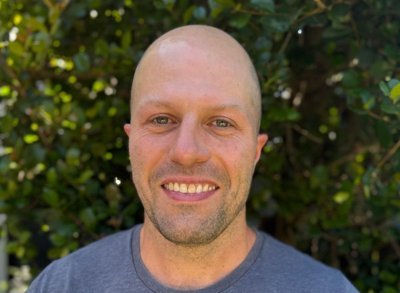
Jeremy Atkin

Jeremy Atkin
Founder & General Partner

Jeremy is an experienced early-stage investor who has built a portfolio of leading Australian hard-tech startups across the energy, industrials, and agriculture sectors as founding partner of Kapunda Capital.

Prior to founding Kapunda, Jeremy was a founding employee of the corporate venture capital funds of Lane Crawford Joyce Group and Woolworths (W23), where successful investments included Eucalyptus, Sonder and Samsara.

He began his career as a management consultant at LEK Consulting, specialising in private equity transactions and first-principles analytical due diligence. He holds a BCom (Liberal Studies) from Sydney University with First Class Honours in Economics.

On Impact
"Impact is not a strategy. New technologies are adopted to improve the bottom line — not for their environmental credentials. Impact requires scale; scale requires capital; capital requires ROI."
On Founders
"You back the jockey, not just the horse. At early stage, founder quality is the single most important criterion. Founders who are excellent and coachable are much more likely to succeed."
On Sales
"Founders tend to over-index on tech development and under-index on sales. Startups learn infinitely more from live commercial interactions than from a lab."
On Adoption
"Corporate inertia is real. Marginal ROI is insufficient. New technologies must solve a pressing pain point or drive ROI that moves the dial — and find a motivated, influential internal sponsor."

Operating Principles

Independence
Think Differently.
Act Decisively.
Ambition
Find Outliers.
Push the Frontier.
Rigour
Do the Work.
No Shortcuts.

What Founders Say

"Jeremy dives deep into the tech, gaining a more thorough understanding of the problem than any other VC we have dealt with, thereby giving him a greater appreciation of the significance and need for the solutions he backs."

Sam Ringwaldt — CEO
CONRY TECH · Industrials

"Jeremy didn't just write a cheque — he rolled up his sleeves and guided us through the messy jump from pre-seed uncertainty to an over-subscribed seed round. He added commercial discipline and real momentum, materially accelerating our march to climate-smart farming at scale."

Darryl Lyons — CEO
RAINSTICK · Agriculture

"Jeremy stands out as one of the very few Australian venture investors willing to back deep-tech breakthroughs at the earliest stage. His conviction in Sicona's vision — driven by rigorous research into our silicon anode technology — gave us the ability to accelerate our plans."

Christiaan Jordaan — CEO
SICONA · Industrials

"Jeremy backed us early with a deep understanding of the sector and a clear view of why we matter in it. He has been sharp, responsive, and easy to work with the whole way through."

Jason Weeks — CEO
CRUX GROUP · Energy
Fund I — Now Raising

Interested in
Investing?

Kapunda Ventures Fund I is raising A$20M to back Australia's best early-stage hard-tech founders. Targeting first close Q3 2026. Minimum commitment A$200k. ESVCLP structure.

Book a Meeting Request More Information
jeremy@kapunda.vc